 Ocean
Ocean
Bare Metal Server Hosting Explained: What It Is and When You Need One
September 22, 2026 · by Aman · 4 min read
If you’ve compared hosting plans and kept seeing the term “bare metal server” next to “dedicated server,” you’re not imagining a difference — there is one, and it matters if performance, isolation, or compliance are non-negotiable for your business.
What Is a Bare Metal Server?
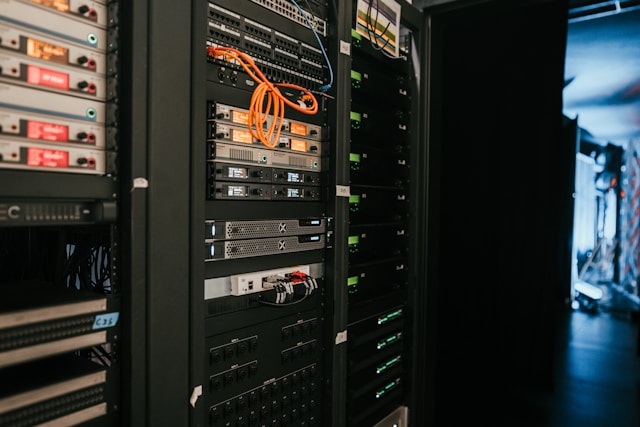
A bare metal server is a physical server rented for the exclusive use of a single customer, with no hypervisor and no virtualization layer sitting between your operating system and the hardware. Every CPU core, every gigabyte of RAM, and every bit of disk I/O belongs to you alone — nothing is shared, and nothing is throttled by a neighboring tenant’s workload.
This is different from a Virtual Private Server (VPS), where multiple customers share one physical machine through virtualization. It’s also worth understanding as a companion to our broader guide on how to choose the right dedicated server hosting for your business.
How Bare Metal Hosting Works
When you order a bare metal server, the provider provisions a physical machine specifically for you — often built around enterprise-grade processors like Intel Xeon, which remains the standard choice for workloads that demand consistent multi-core performance. You get root or administrator access, full control over the operating system, and the ability to install and configure software exactly as your application requires.
Provisioning typically takes longer than spinning up a cloud instance, since real hardware has to be allocated and configured, but what you get in return is predictable, dedicated performance with no “noisy neighbor” problem.
Bare Metal vs VPS vs Cloud vs Managed Dedicated
These terms get used loosely, so here’s how they actually compare:
| Type | Hardware Sharing | Performance Consistency | Control Level | Best For |
|---|---|---|---|---|
| Bare Metal | None — single tenant | Highest | Full (you manage everything) | High-performance, compliance-sensitive workloads |
| VPS | Shared via virtualization | Moderate | Root access, but resources capped | Small to mid apps, dev/test environments |
| Cloud Instance | Shared, auto-scalable | Variable | High, but abstracted | Elastic, unpredictable traffic |
| Managed Dedicated | None — single tenant | Highest | Provider handles admin | Businesses without in-house sysadmins |
| Unmanaged Dedicated | None — single tenant | Highest | Full (you manage everything) | Teams with their own technical staff |
In practice, “bare metal” and “unmanaged dedicated server” often describe the same underlying hardware setup — the distinction usually comes down to whether the provider bundles in management, monitoring, and support on top.
Who Actually Needs Bare Metal?
Bare metal makes the most sense when:
- Your application is CPU or I/O intensive and can’t tolerate resource contention (databases, big data processing, high-traffic e-commerce)
- You have compliance or security requirements that prohibit shared infrastructure (finance, healthcare, government-adjacent work)
- You’re running licensed software with per-core or per-socket licensing, where knowing the exact physical core count matters
- You need consistent, benchmarkable performance — for gaming servers, render farms, or latency-sensitive trading systems
If your traffic is unpredictable or you’re still validating a product, a VPS or cloud instance is usually the more cost-efficient starting point — you can always move to bare metal once your workload justifies it.
What Does Bare Metal Cost?
Pricing depends heavily on the CPU generation, RAM, storage type (NVMe vs SATA), and bandwidth allocation. As a rough guide, entry-level bare metal servers built on older-generation processors sit at the lower end, while Xeon-based configurations with NVMe storage and higher RAM sit meaningfully higher. The bigger cost driver, though, is usually whether you’re buying it managed or unmanaged — unmanaged is cheaper upfront but assumes you (or your team) can handle OS patching, security hardening, and troubleshooting yourselves.
Choosing the Right Bare Metal Configuration
Rather than picking from a fixed set of plans, most businesses are better served by specifying exactly what they need — CPU generation, core count, RAM, storage type and capacity, and bandwidth — and having it built to order. That’s exactly what our custom dedicated server configuration page is for: you select the combination that fits your workload, and we provision it accordingly, rather than forcing you into an oversized or undersized standard tier.
Ready to spec out your own bare metal server?
Looking for a Dedicated Server for Your Business?
Contact OceanWebHosting for a custom server solution.
Explore Dedicated Servers
Aman
Writes about dedicated server hosting, performance, and infrastructure for the Ocean Web Hosting blog.